
You know fall has arrived in North Georgia not by the calendar but by your sinuses.
The trees are still green, the leaves haven’t turned — and yet, around the middle of September, the sneezing starts again.
Most people blame the leaves. They’re wrong, and the difference matters for how you keep your home livable.
Short answer: North Georgia has a second allergy season every fall, and the trigger is ragweed, not falling leaves. Ragweed releases pollen August through November, peaking in mid-September, and it’s among the most allergenic pollens there is — light enough to drift indoors on the wind (Atlanta Allergy & Asthma Center). The leaves matter too, just differently: leaf litter tracks indoors, and as it sits and decomposes in damp piles it becomes the kind of place mold tends to take hold. The good news is the indoor defense is the same playbook as spring pollen — HEPA, damp microfiber, entry discipline — and fall is the natural window to fold in the pre-winter home-care pass before you seal the house up for the cold.
After 20+ years cleaning North Georgia homes through both allergy seasons, here’s what I’ve learned: raking harder isn’t what decides who breathes easy in the fall. The households that stay comfortable are the ones who recognize fall as a second allergy season and run the same indoor playbook spring calls for — using the cooling months to reset the house before the windows close for winter.
Fall Is a Second Allergy Season — and Ragweed Is the Trigger
In the spring pollen post I made the case that the visible yellow dust — pine pollen — isn’t what makes you sneeze; the invisible hardwood pollen from oak, sweetgum, and hickory is the real misery. Fall has its own version of that misdirection.
People see leaves drop and assume the leaves are the allergen. They aren’t. The thing actually firing up your sinuses in September is ragweed — a low, weedy plant that releases enormous quantities of extremely light pollen. According to the Atlanta Allergy & Asthma Center, ragweed pollen is among the most allergenic pollens there is, the season runs August through November, and counts peak in mid-September. In the Southeast it can start as early as August.
What makes ragweed such a problem is the same thing that made hardwood pollen worse than pine: it’s tiny and buoyant. A single plant releases pollen that travels for miles, and grains that light don’t politely stay outside. They ride the breeze through an open door, settle on clothes and pet fur, and drift onto every surface inside. By the time symptoms peak in mid-September, the trees haven’t even thought about turning — which is exactly why the leaves get blamed and ragweed gets away with it.
If anyone in your household reacted in March and April, there’s a good chance they’ll react again now — same airway, different pollen, same indoor strategy.
How Ragweed Gets Indoors — and How to Keep It Out
Because ragweed pollen behaves so much like the hardwood pollen of spring, the containment strategy is nearly identical. If you read the spring guide, this will feel familiar.
Keep windows closed when counts are high. Those first crisp, dry fall afternoons are the most tempting of the year to throw the windows open. They’re also peak ragweed-drift conditions — a dry, breezy September day moves the most pollen. That’s the day to keep the house sealed and let the HVAC handle the air.
Damp microfiber, never dry dusting. A dry cloth or feather duster lifts settled pollen right back into the air; a damp microfiber cloth captures it and holds it in the fibers. This is the single highest-leverage habit in either allergy season — top down, every time.
HEPA filtration on the vacuum. A standard vacuum redistributes fine pollen into the air you’re breathing; a HEPA-filtered vacuum captures it. Vacuum slowly so the airflow has time to pull particles in rather than kick them up.
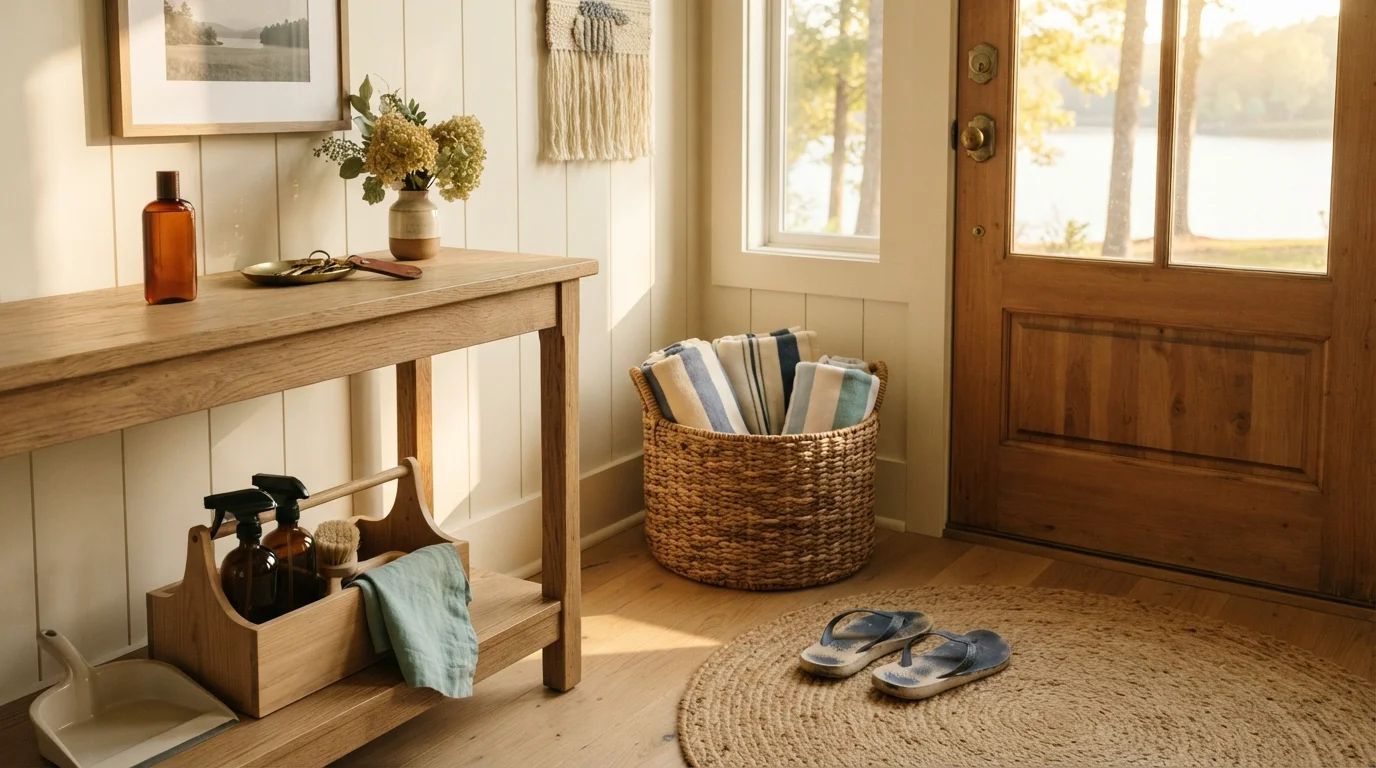
Entry discipline. Shoes off at the door, a coarse outdoor mat plus an indoor mat, and — for allergy households — changing clothes after time outside. Ragweed loves to hitchhike on fabric and fur, so wiping down pets when they come in cuts one of the fastest pollen-into-the-house pathways.
HVAC filter changed on schedule. Your filter is the lungs of the house in allergy season. We’ll come back to cadence below, because fall is when the system quietly switches from cooling to heating and the filter needs attention either way.
For a deeper look at the allergens that build up in a home across the year, our allergen risk scanner walks through the major contributors and where they hide.
Leaf Litter and Leaf Mold: The Second Fall Allergen
Now, the leaves. They aren’t the airborne allergy trigger that ragweed is — but they create their own indoor problem, and it’s a real one.
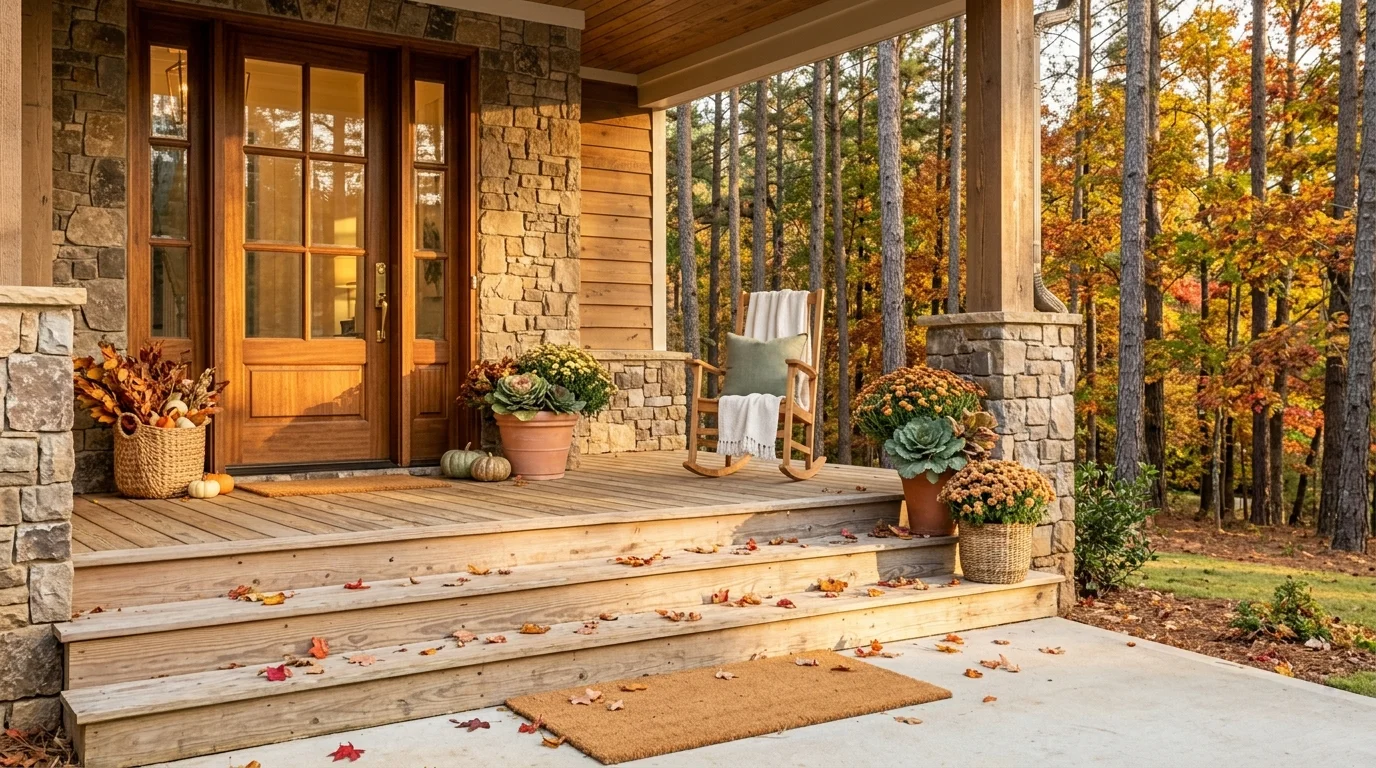
Around Lake Lanier, peak color lands in the mid-to-late October window, often the last weekend of the month. Georgia State Parks frames its annual Leaf Watch as a multi-week wave: color begins in the North Georgia mountains in late September and rolls downhill roughly 1,000 feet of elevation per week, so the lake and its lower elevations turn later than the ridges above. By the time the lakeside hardwoods peak, you’re tracking a lot of organic debris across the threshold every day.
That matters indoors for two reasons.
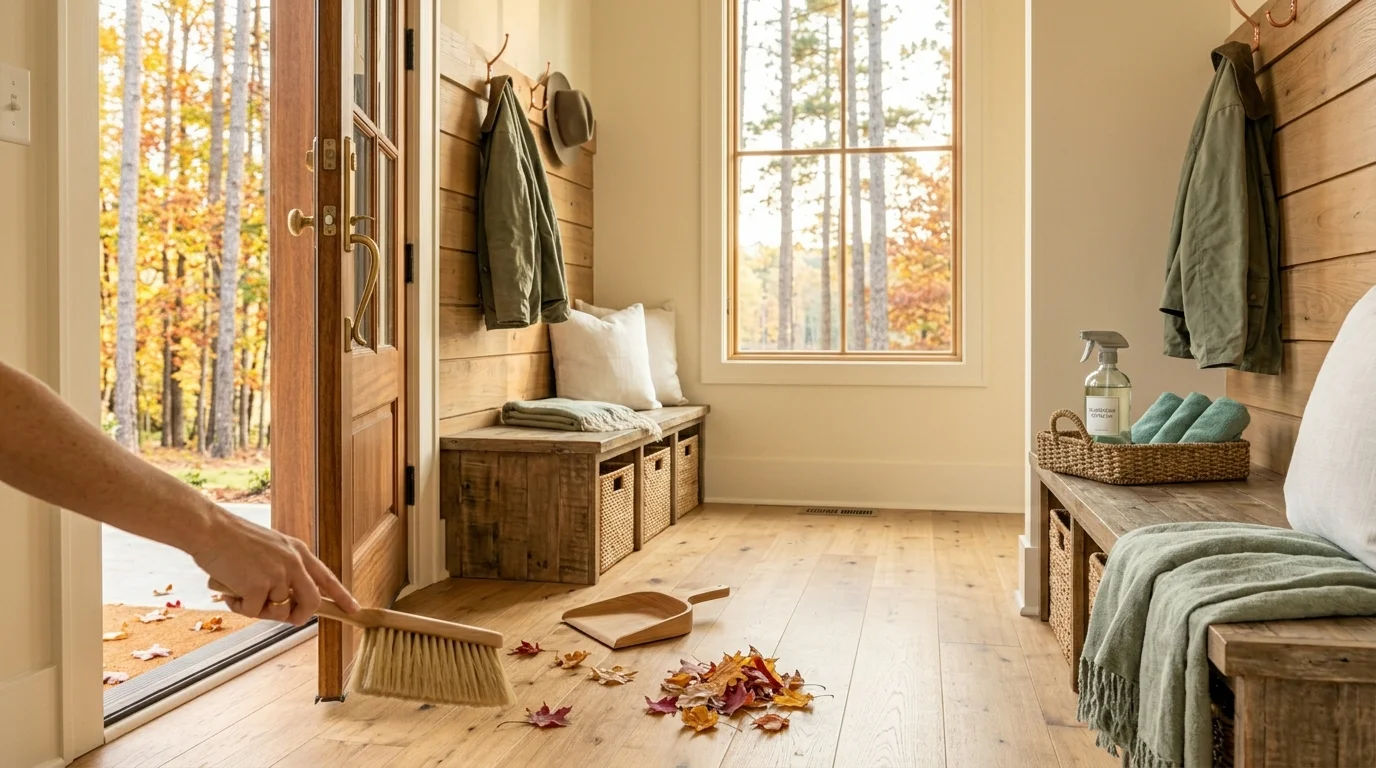
Tracked-in debris. Wet leaves, leaf fragments, and the grit that comes with them get carried in on shoes, paws, and pant cuffs, settling into entry mats, hardwood seams, and rugs. Left alone, it grinds into floors and accumulates in exactly the high-traffic zones you’d rather keep clean.
Damp, decomposing litter. Here’s the part most people miss. When leaves pile up and stay wet — in the gutters, against the foundation, in the flower beds, on a shaded deck — that decomposing, damp litter becomes exactly the kind of habitat where mold tends to take hold, and I’ve seen plenty of it on lake lots across 20-plus years here. I’m a cleaner, not an allergist, so take that as field observation rather than a clinical claim — but the practical takeaway holds: keeping that wet debris from sitting, and from getting tracked indoors, is one less thing your HEPA vacuum and damp microfiber have to manage alongside the ragweed.
So the leaves aren’t the first fall allergen — but between the physical debris and the damp litter they leave behind, they’re a solid second concern. Staying ahead of them outdoors is as much an indoor-air decision as a curb-appeal one.
The Pre-Winter Maintenance Window
Fall does one more thing for a North Georgia home: it hands you the last comfortable working window before winter. Around Gainesville, frost risk begins around October 26, with a 50% chance of frost (32°F) by about November 12 and a frost nearly certain by November 22 (dates derived from NOAA 1991–2020 Climate Normals, via Almanac.com). Once those windows close and the house seals up for the season, indoor air quality is whatever you left it as.
None of what follows is contracting work — it’s ordinary home care, the kind of pre-winter pass that keeps a house healthy. Three items earn their place every fall:
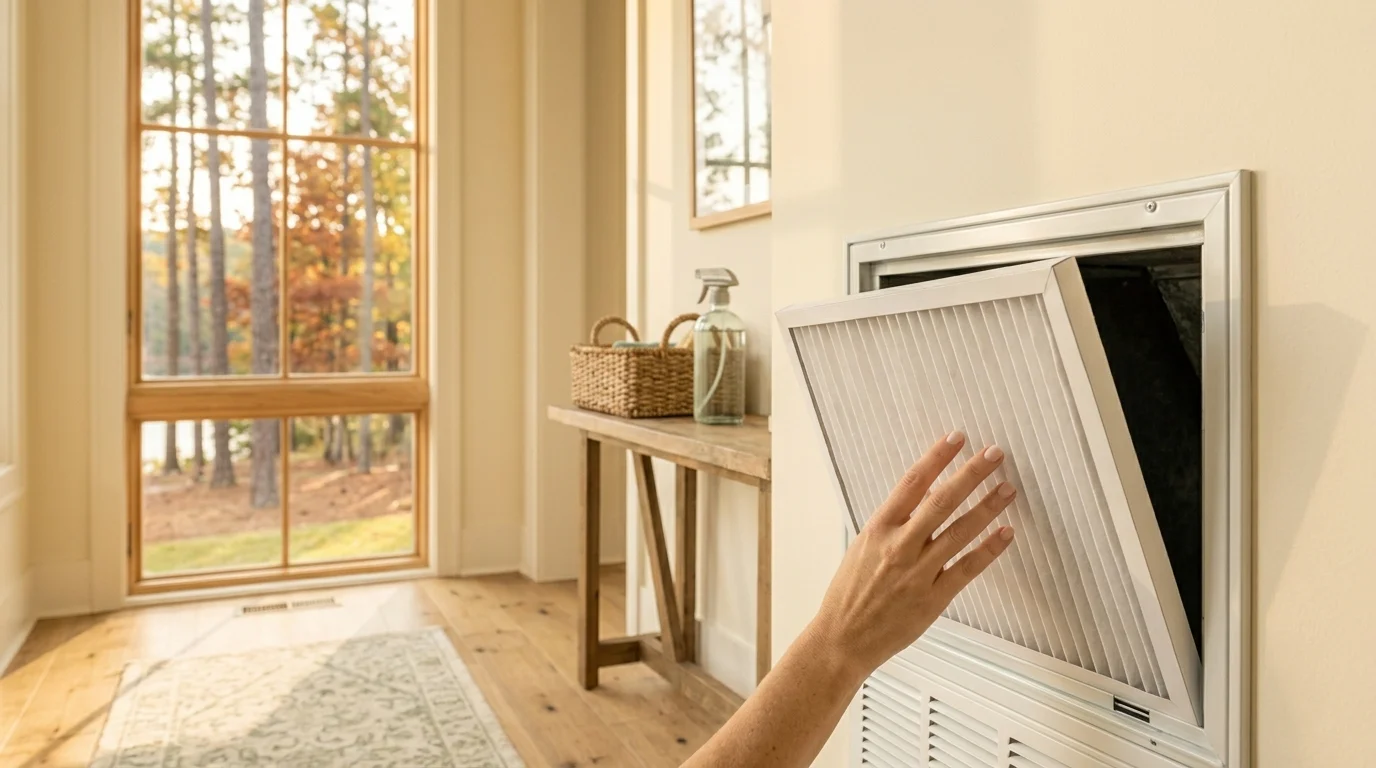
HVAC filter — at the cooling-to-heating changeover. The U.S. Department of Energy advises cleaning or replacing the filter every one to two months during the cooling season. Fall is the hand-off moment — the system quietly shifts from cooling to heating — and that’s precisely when a stale, loaded filter does the most lasting damage. Once the windows are shut, your HVAC recirculates the same indoor air for months; a fresh filter at the changeover keeps a season’s worth of ragweed and leaf-mold spores from cycling back through the house all winter. Of the three fall tasks, this is the one that most directly decides what your winter air is made of.
Gutters — twice a year, fall after leaf drop. The standard home-maintenance cadence is twice a year, once in spring and once in fall after the leaves have dropped, with more frequent attention where there are a lot of trees. On a wooded lake lot, that’s most of us. Clearing the gutters after the late-October leaf peak does double duty: it protects the house from water backing up over winter, and it removes one of the prime damp-leaf reservoirs sitting right at the roofline.
Dryer vent — once a year. The U.S. Fire Administration advises clearing lint from the dryer vent pipe once a year — more often if loads are taking longer than usual to dry — and ties skipped cleaning to roughly 2,900 dryer fires a year. Fall, when the household shifts to heavier loads and longer dry times, is the natural time to put it on the calendar.
The Indoor Reset Before the Windows Close
Here’s the throughline. Spring, summer, and fall each load the house in their own way — pollen, then humidity and mildew, then ragweed and leaf debris. Winter doesn’t add much new load, but it does something sneakier: it traps whatever’s already there. The windows close and the HVAC recirculates the same air for months.
That’s why a fall reset is worth more than it looks. The goal is to clear the accumulated ragweed and leaf load before you seal the house, not to chase it once the air is locked in. The same surfaces that mattered in spring matter now: window sills and tracks, blinds, ceiling-fan blades, the tops of door frames, baseboards, vents and registers, and the soft surfaces — drapes, upholstery, area rugs, entry mats — that quietly hold everything that’s drifted in since August.
Done well, a fall reset restarts the maintenance cycle clean and lets your filter and day-to-day habits hold the line through a closed-up winter. For when a deeper, top-to-bottom pass makes sense versus steady upkeep, recurring cleaning vs. deep cleaning breaks down the difference.
What Lanier Pristine Does Differently
Fall has its own map, and we clean to it. The first thing we trace on a lake-lot home in October is the leaf-debris paths — the lanes from the dock, the driveway, and the side door where wet leaf fragments and grit get walked in and ground into entry mats, hardwood seams, and the first ten feet of every floor. Those lanes carry the most tracked-in load this time of year, so we work them before the debris migrates deeper into the house and the soft surfaces that hold a whole season’s worth of it.
The damp-litter and spore load the season leaves behind is the second fall-specific concern — which is why our HEPA-filtered vacuums and top-down damp dusting earn their keep most in September and October, capturing what’s settled rather than putting it back in the air you’re about to seal in for winter.
And because fall is really a triage season, we lead with the pre-winter home-care calendar: the filter change at the cooling-to-heating changeover, the gutters after leaf drop, the dryer vent on schedule. Half the value of professional cleaning is getting the right small things done at the right moment — and fall is when those three matter most. Because it’s the same small team on your home each visit, they already know your entry points and tracked-in paths, so they stay ahead of the season instead of reacting to it.
Book a Pre-Winter Reset on Lake Lanier
The right move in fall is to clear the house before the windows close — sometime between the mid-September ragweed peak and the late-October leaf drop, ahead of that late-November frost. Reset the accumulated allergen load, fold in the pre-winter home-care pass, and head into winter with clean, well-filtered air instead of trapped air.
If you’d like a pre-winter reset for your North Georgia home, request a quote. We serve the full Lake Lanier corridor with same-week scheduling, and fall books up as homeowners get ahead of the cold — so a little lead time helps. For the year-round picture, see our seasonal cleaning guide, and if your home reacted in the spring, the pollen season guide is the companion piece.