
Moving, Selling, or Renovating? A Cleaning Guide for North Georgia Homeowners
Whether you're preparing a home to sell, moving into a new property, recovering a security deposit, or cleaning up after a renovation, this guide covers the standards, timing, and decisions that make every transition easier.

- 1. What "Property Transition Cleaning" Means
- 2. The Four Major Property Transitions
- 3. Why Transitions Demand a Different Standard
- 4. Selling Your Home: The Pre-List Strategy
- 5. Buying or Moving In: A Clean Slate
- 6. Move-Out: Securing Your Deposit
- 7. Post-Construction & Renovation Cleanup
- 8. Lake Lanier Environmental Factors
- 9. Coordinating with Agents, Builders & Managers
- 10. DIY vs. Professional Decision Framework
- 11. Common Questions
- 12. Find the Right Service for Your Transition
What "Property Transition Cleaning" Actually Means
After 20+ years in the trade — on the Lake Lanier region since 2020 — I've noticed something: the deepest, most consequential cleaning jobs aren't routine maintenance. They're the cleanings that happen at major life events — when a property changes hands, when someone moves in or out, or when a renovation finishes.
These aren't regular cleanings. They're property transition cleanings.
The category exists because the standards, scope, and stakes are completely different from routine work. A landlord at a move-out inspection isn't checking whether the floors look "lived-in clean." They're looking for evidence the home is ready for the next tenant. A homebuyer touring a property isn't asking whether it's been dusted recently. They're forming an impression of how cared-for it is. A homeowner moving into a freshly renovated kitchen isn't worried about countertop crumbs. They're worried about drywall dust in the HVAC system.
In each of these moments, "good enough for daily life" isn't good enough. Property transition cleaning fills that gap.
This guide covers the four major transitions, what each one demands, and how to plan for it.
The Four Major Property Transitions
Most property transitions fall into one of four categories. Each has different goals, different stakes, and a different ideal cleaning approach.
Selling Your Home
The goal is to make the property show as well as it possibly can — for listing photos, in-person showings, and the buyer's final walkthrough. Buyers form their impression in the first 30 seconds, and cleanliness influences perceived value more than most sellers realize. A pre-list deep clean sets the visual baseline that staging, photography, and showings all build on.
Buying or Moving In
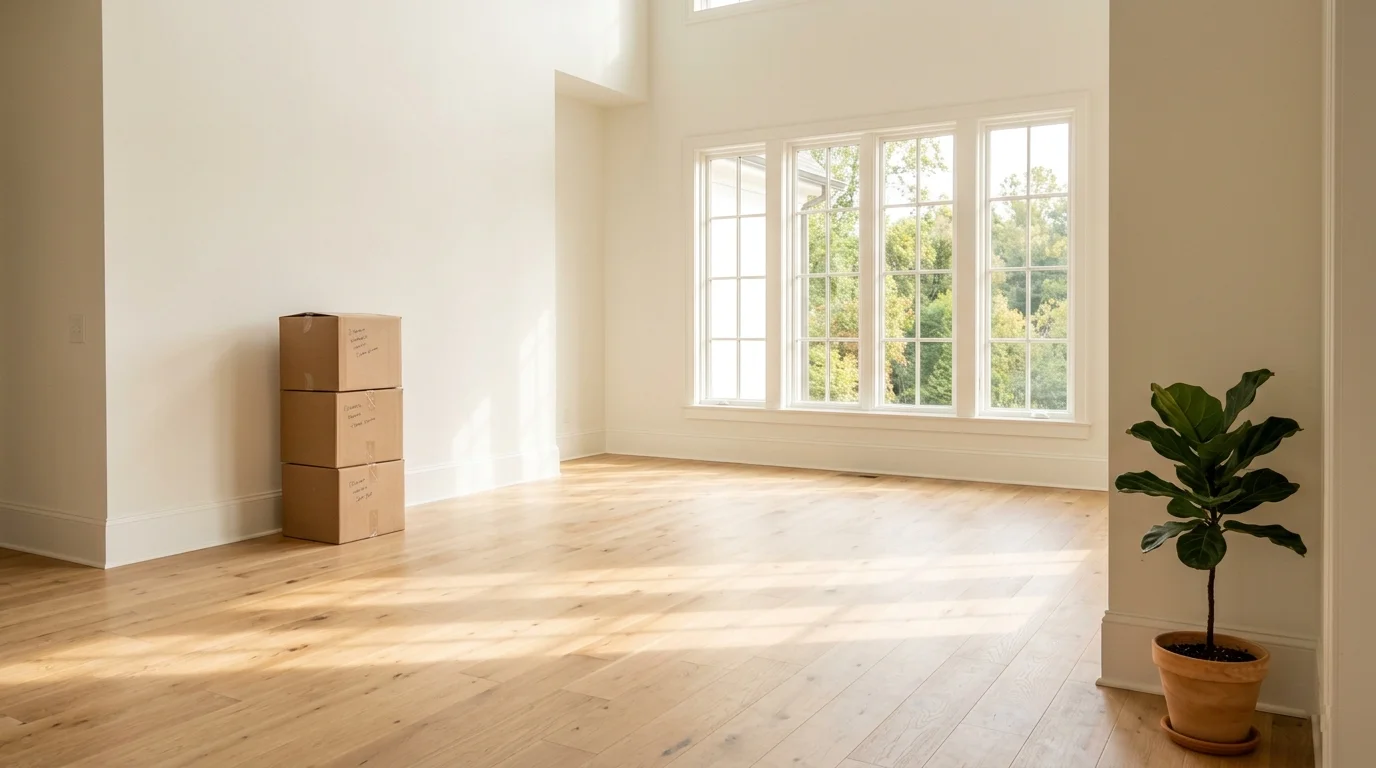
You're stepping into a property someone else lived in (or, in new construction, that contractors recently built). You'll never have better access to every surface than the moment before your furniture arrives. A move-in clean takes advantage of that empty-house window to deliver a fresh start.
Move-Out (Renting)
The goal is to pass the landlord's inspection and recover your full security deposit. Georgia law requires landlords to return the deposit (minus legitimate damages) within 30 days, and cleaning is one of the most disputed items. A thorough move-out clean — combined with photo documentation — is the strongest case you can make.
Renovating or Post-Construction
Once the contractors leave, the cleaning work begins. Construction generates a specific kind of mess: fine drywall dust, paint splatter, adhesive residue, and debris that ordinary vacuums can't handle (and actually spread further). This requires specialty equipment and a multi-pass approach.
Skip ahead to your specific situation, or read straight through for the complete framework.
Why Transitions Demand a Different Standard
A weekly housekeeping visit is about maintaining a baseline that already works. Surfaces are dusted, floors are swept, bathrooms are sanitized — and the same homeowner won't notice the same minor imperfections week after week.
Transition cleaning is the opposite. The next person to walk through that door — an inspector, a buyer, a new tenant, your new self — is scrutinizing the property for evidence of how it was cared for. Missed details aren't tolerated; they're catalogued.
That's why transition cleaning takes longer, costs more, and delivers more visible results. The scope expands to include:
- Inside appliances — oven interior, fridge drawers, dishwasher, microwave
- Baseboards, door frames, switch plates — the dust line nobody notices except inspectors
- Window tracks, blinds, ceiling fans — overhead and edge details
- Inside cabinets and drawers — the spaces a routine clean skips
- Behind and under fixtures — toilets, refrigerators, stoves
- HVAC vents and registers — especially after construction
The other shift is empty-house access. A property without furniture cleans roughly three times faster than the same property fully furnished. It also gets a deeper clean because every surface is reachable. That advantage disappears the moment the moving truck shows up.
Whether you DIY or hire a professional, treat a transition as fundamentally different from routine cleaning. The same effort that produces "fine" weekly results will produce a disappointed inspector or a low-ball buyer offer when used at a transition moment.
Selling Your Home: The Pre-List Cleaning Strategy
Sellers underestimate how much cleanliness affects perceived home value. Two identical properties — same square footage, same finishes, same neighborhood — show very differently when one has visible dust on the baseboards and the other doesn't.
If you're preparing your home for the market, here's the cleaning timeline:
Two weeks before listing photos
Do (or hire) a complete deep clean. Photos lock in for the entire listing period — the home looks as clean as it does in those photos. Areas to focus on: kitchen surfaces (especially appliances), bathroom grout and glass, window glass and tracks, baseboards and door frames, ceiling fan blades, and the entry/foyer area where buyers form first impressions.
Day before each showing
Maintain rather than re-clean. Wipe kitchen counters, run a quick vacuum, take out trash, run the dishwasher, freshen towels. Open blinds and turn on lights before leaving. Showings happen on short notice — a 15-minute reset prevents the home from looking lived-in.
Day before the buyer's final walkthrough
A second deep clean before closing isn't required, but it's a thoughtful touch — and signals to the buyer that you cared for the home. Many sellers schedule a light touch-up clean the day before final walkthrough.
A note on timing for the moving truck
For your own move-out clean, schedule it for AFTER the moving truck leaves and BEFORE the new owners take possession. Your closing contract may specify "broom clean" condition, which is the legal minimum — but if you're hoping for a positive review on your real estate agent's profile, leaving the home truly clean goes a long way.
If you're a seller working through a renovation before listing, see Section 7 below — post-construction cleanup is its own distinct service.
For a complete week-by-week task list — from the deep clean two weeks before photos through the showing-day reset — see our pre-listing deep clean checklist for sellers.

Buying or Moving In: Starting in a Clean Slate
The moment between when the previous owner moves out and your furniture arrives is the most efficient cleaning window you'll ever have. An empty house cleans about 3× faster than the same house furnished, and you have unobstructed access to every surface.
Whether the previous owner left the property "broom clean" or genuinely clean (the difference is real), a fresh-home clean before move-in is the smartest investment you can make in the property's first impression on you and your family.
Priority order for an empty-house move-in clean
- Bathrooms first. This is the highest-stakes area — toilets, showers, vanities, drains. Disinfect everything before you put a toothbrush down.
- Kitchen second. Cabinets (inside and out), drawers, refrigerator interior, dishwasher, oven, microwave, sink, faucet.
- Bedrooms third. Closets, floors, baseboards, ceiling fans, window tracks. This is where you'll be sleeping — start fresh.
- Living spaces last. Floors, fireplace, baseboards, window glass.
New construction differences
If you're moving into new construction, expect grout haze on tile, dust film on horizontal surfaces, and paint touch-ups on door frames. Builders typically deliver a "broom clean" home, which is exactly what it sounds like — debris swept, fine dust ignored. You'll need a thorough move-in clean (or post-construction clean if dust is heavy) before the home is genuinely livable.
For a complete breakdown of priorities, see our What to Clean First in a New Home guide →
Move-Out Cleaning: Securing Your Deposit (or Pleasing Your Buyer)
Move-out cleaning is the most regulated and consequential transition cleaning, especially for renters. Georgia O.C.G.A. § 44-7-34 governs how landlords return security deposits, and cleaning is one of the most-disputed deduction categories.
Most leases reference a "broom clean" standard, which sounds simple but is open to landlord interpretation. In practice, "broom clean" means the property is left in the same general condition as when you moved in — minus normal wear and tear — and ready for the next tenant without major work.
What inspectors actually look for
- Inside ovens and refrigerators — most-checked, most-billed
- Behind appliances — visible from a side angle and frequently overlooked
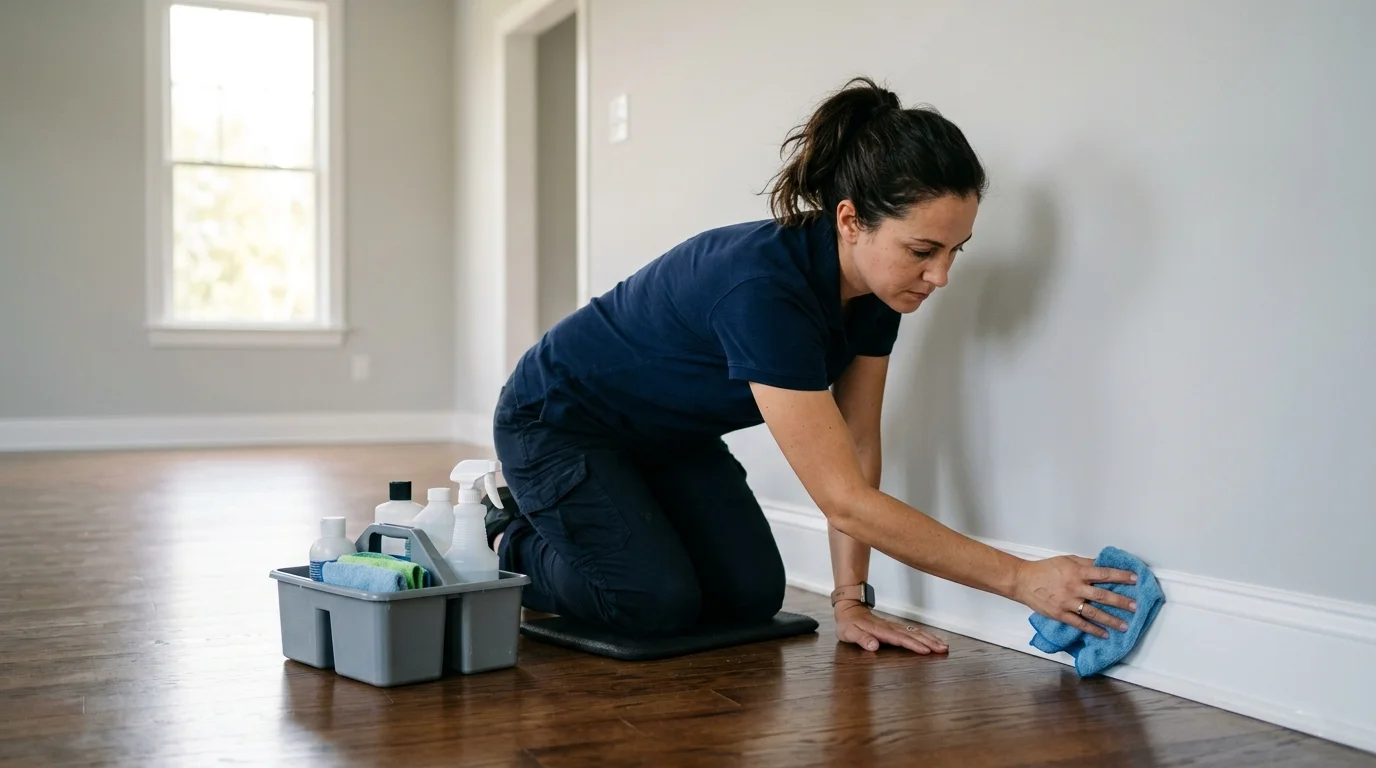
- Baseboards and door frames — the dust line that signals attention to detail
- Inside cabinets and drawers — open them all, including the corners
- Switch plates, light fixtures, ceiling fan blades — overhead detail
- Bathroom grout, shower glass, drain hair traps — bacteria-contaminated areas
- Window tracks and blinds — dust accumulation that takes specific tools
Photo documentation is your insurance
Whether you DIY or hire a service, photograph every room after the cleaning is complete. Date-stamp the photos via your phone's metadata. If the landlord disputes a deduction, photos backed by a paid invoice from a professional cleaning service are extremely persuasive in dispute resolution.
Timing relative to the moving truck
Schedule the cleaning for AFTER the moving truck has left. You can't clean baseboards behind a couch that's still in the room. Most renters schedule the cleaning the day after move-out, not the same day, to give themselves a buffer.
For a comprehensive room-by-room checklist with Georgia-specific landlord considerations, see our Move-Out Cleaning Checklist for Security Deposits. When you're ready to book, see our move-in/move-out cleaning service →
Post-Construction & Renovation Cleanup
Post-construction cleanup is the most specialized transition cleaning. It exists because the mess that construction generates isn't ordinary mess — it's fine particulate matter that behaves like flour and gets into HVAC systems, electronics, soft surfaces, and the spaces between baseboards and floors.
The biggest threat is drywall dust. A standard residential vacuum doesn't capture it; the dust passes through the filter and is blown back into the air. HEPA filtration (capable of trapping 0.3-micron particles) is non-negotiable for post-construction work — without it, you're just relocating the dust.
The multi-pass approach
Professional post-construction cleaning happens in three phases:
- Coarse debris removal. Construction trash, packaging, leftover materials. Most general contractors handle this as part of their final walk.
- Fine particulate cleaning. HEPA vacuum every horizontal surface. Wipe walls, doors, trim, and fixtures with damp microfiber. Clean inside HVAC vents and registers (this is where contractors most often skip — and where dust accumulates over months).
- Detail and finish. Paint touchup cleanup, adhesive residue removal, specialty surface care, glass cleaning, and final inspection.
When to schedule
Schedule the post-construction clean after the contractor signs off but before furniture arrives or you move back in. For renovations of single rooms (kitchens, bathrooms), 24–48 hours after the contractor leaves is typical. For whole-home renovations, plan 2–3 days for a thorough multi-pass.
The HVAC consideration
Drywall dust is the leading cause of post-renovation HVAC issues. Replace your air filter immediately after the construction is complete (MERV 11 minimum), and consider scheduling an HVAC tune-up if the renovation involved significant duct disturbance.
Combining with move-in
If you're moving into a renovated property, schedule the post-construction clean BEFORE the move-in clean — these are separate services. Drywall dust takes specialty handling that a standard move-in clean isn't equipped for.
For specifics on what's included and how to schedule, see our post-construction cleaning service →
Lake Lanier Environmental Factors During Transitions
Property transitions in the Lake Lanier region face environmental factors that homeowners in other parts of Georgia or the Southeast simply don't deal with at the same intensity.
Red clay tracking
Georgia red clay isn't ordinary dirt — it's iron oxide, which acts more like a dye than a contaminant. Standard vacuums and sponges don't remove it; they smear it. During moves, clay tracks across carpets and hardwoods at a rate that can permanently stain if untreated. Address it within hours, not days.
Pollen seasons
March through May, fine yellow pollen coats every horizontal and vertical surface in the area. If you're listing your home for spring sale, the listing photos should be taken AFTER a deep clean and BEFORE pollen accumulates again — typically a 24–48 hour window. Stage your home accordingly.
Humidity-driven mildew
Empty homes are mildew incubators. Without active climate control, humidity above 60% allows mold colonization in bathrooms, closets, and around windows. If a property is sitting empty between transitions (vacation, listing, post-renovation), maintain HVAC and consider a dehumidifier.
HVAC filter replacement at every transition
This is the single highest-ROI maintenance habit during transitions. Replace the filter (MERV 11 minimum) immediately after move-in, after construction, and before any showing. Your indoor air quality and the system's longevity both benefit.
Local Lake Lanier expertise matters because these conditions stack on top of every other cleaning challenge. A cleaning service that doesn't understand red clay treatment or pollen-season timing will deliver inconsistent results.
Coordinating with Real Estate Agents, Builders, and Property Managers
Most of our clients work with us directly as homeowners. That said, transition cleaning often involves other professionals — and the best outcomes come from coordinating the cleaning timing with everyone else's schedule.
Real estate agents
Agents care about three cleaning moments: pre-list (before photos and the listing goes live), during showing season (touch-up cleaning for high-traffic showings), and pre-closing (the day before the buyer's final walkthrough). Communicate with your agent about which cleanings they recommend or arrange themselves — many agents have preferred vendors and will coordinate scheduling for you. Be sure your cleaner understands the listing timeline so they can prioritize visible-impact areas (kitchens, bathrooms, entry).
Builders and general contractors
Most contractors complete a "rough sweep" cleanup as part of their punch list. This isn't post-construction cleaning — it's debris removal. Schedule the actual post-construction clean after contractor sign-off, before you take possession. If your builder has a preferred cleaning vendor for warranty walkthroughs, ask about that timeline. Otherwise, schedule independently within a week of contractor completion.
Property managers
For owners with rental properties (long-term or vacation), the property manager often handles cleaning scheduling between tenants or guests. If you're transitioning from a long-term rental to a short-term rental (or vice versa), expect different cleaning standards and frequency. A long-term tenant turnover might involve one deep clean every few years; a short-term rental might involve weekly or biweekly turnovers. The property manager should communicate the standard expected for the property type.
A final note on communication
The best transitions happen when everyone involved — agent, builder, manager, mover, cleaner — knows the dates, the access plan, and the standards. Email all parties on the same thread when possible.
DIY vs. Professional: A Decision Framework by Transition Type
Not every transition cleaning needs to be professional. Here's a quick framework by transition type:
Selling
Professional recommended. Pre-list cleaning has a direct, measurable impact on sale price. Even a $315 deep clean is a small fraction of the value impact on the listing.
Buying / Moving In
Hybrid works well. Most homebuyers do a quick disinfect of bathrooms and kitchen themselves (an hour of work for peace of mind), then hire pros for the deeper move-in clean.
Move-Out
Depends on deposit size and time available. If your deposit is $800 and a professional move-out clean is $420, the ROI is clear. With plenty of time and a small deposit, DIY can work — but a thorough move-out clean takes 8–12 hours for a 2-bedroom apartment.
Post-Construction
Professional strongly recommended. Drywall dust requires HEPA equipment that costs more to rent than to hire a cleaning service. The chemicals needed for paint and adhesive removal are specialty products. DIYers typically miss the dust resettlement and end up frustrated.
A budget consideration
If you're managing several transitions in a short window (say, selling current home + buying new home + post-construction at new home), the combined cleaning costs add up. Many cleaning services offer multi-service pricing for clients managing multiple transitions — ask before scheduling.
For deeper analysis of when to DIY versus hire pros, see our Move Cleaning DIY vs. Professional guide →
Common Questions About Property Transition Cleaning
Answers to the most common questions homeowners and renters ask about cleaning during major transitions.
How is property transition cleaning different from regular house cleaning?
Property transition cleaning is heavier-duty work tied to a major life event — moving, selling, buying, or renovating — rather than maintenance. The standards are different: empty homes get scrutinized by inspectors, buyers, or new occupants, and missed details have real consequences (lost deposits, lower sale prices, dust contamination). The scope is also broader — we clean inside cabinets, behind appliances, baseboards, ceiling fans, and other areas a routine cleaning wouldn't touch. And the timing is event-driven rather than recurring.
Should I clean before or after the moving truck arrives?
For a move-out, clean after everything is out so cleaners can access every surface (baseboards, behind appliances, inside closets). For a move-in, clean before furniture arrives — empty homes clean roughly 3× faster than furnished ones, and you'll never get the same access to floors and corners again. If you're hiring movers and cleaners on the same day, schedule the cleaning AFTER the movers leave (move-out) or BEFORE they arrive (move-in).
How long after construction is finished should I wait to schedule a clean?
Most general contractors do a "broom clean" (sweep up large debris) before sign-off. From there, schedule the post-construction clean within 1–2 weeks — the sooner the better, since drywall dust continues to settle into HVAC systems, electronics, and soft surfaces over time. If you're moving in immediately after construction, the post-construction clean should happen between contractor sign-off and your moving day, ideally with at least 24 hours between cleaning and move-in.
What's the difference between move-out cleaning and post-construction cleaning?
Both are heavier than routine cleaning, but they handle different problems. Move-out cleaning focuses on inspection-ready surfaces — inside appliances, baseboards, blinds, window tracks, behind fixtures — to satisfy a landlord's inspection or a buyer's walkthrough. Post-construction cleaning targets the fine particulate aftermath of building work — drywall dust (which behaves like flour and gets into everything), paint splatter, adhesive residue, and the kind of debris that requires HEPA filtration and specialty products. For post-construction jobs we bring in HEPA-filtered vacuums and specialty supplies that aren't part of a standard cleaning kit.
Can you handle both — for example, post-renovation cleanup before a move-in?
Yes — combination scenarios are common. The most frequent is post-renovation work followed by a move-in clean once contractors finish (drywall dust handling first, then a fresh-home clean). Another common combination is move-out cleaning paired with post-renovation work for sellers who renovated before listing. Tell us the situation when you request a quote and we'll structure the visit appropriately.
Find the Right Service for Your Transition
Two services cover the property transition cleaning scope. Both share our 100% Boutique Cleaning Guarantee — what differs is the scope, the equipment, and the timing.
Move-In/Move-Out Cleaning
For renters recovering deposits, sellers preparing to close, and buyers settling into a new home.
View Service DetailsPost-Construction Cleaning
For homeowners after a renovation or contractors completing a build. HEPA-filtered, multi-pass, dust-eliminating cleanup.
View Service DetailsNot sure which one fits? Tell us about your transition and we'll recommend the right approach.
Mara Guilford
Owner & Founder, Lanier Pristine
Mara has been cleaning homes for 20+ years — across the Lake Lanier region since 2020 — with deep experience supporting clients through every kind of property transition — sellers preparing to list, renters recovering deposits, homeowners settling in, and renovation cleanups. She founded Lanier Pristine on the principle that every home — at every life stage — deserves boutique-level attention.
Learn more about Mara