


Lake Lanier does not empty out after Labor Day. It changes hands.
The families who booked every summer weekend go back to school calendars, and a different guest takes their place — couples driving up for leaf color, retirees who waited out the August heat, small groups who want a quiet house on the water with a fire pit instead of a ski boat. The water goes still. The evenings get cool. And the shoulder season that plenty of hosts mentally write off becomes some of the steadiest booking weeks of the year.
The catch is that a fall turnover is not a summer turnover with fewer beach towels. The house is used differently, the weather works against your entries, and the things guests grade you on quietly move indoors.
Why fall is a booking window on Lake Lanier
Autumn around the lake runs on a different rhythm than summer. Color arrives in the North Georgia mountains first and works its way downhill toward the lake over several weeks, which stretches the leaf-season draw across a long stretch of October rather than one busy weekend. Cooler-weather guests book differently, too: longer midweek stays, smaller groups, more couples, and far more interest in whether the house is genuinely comfortable to sit inside for three days.
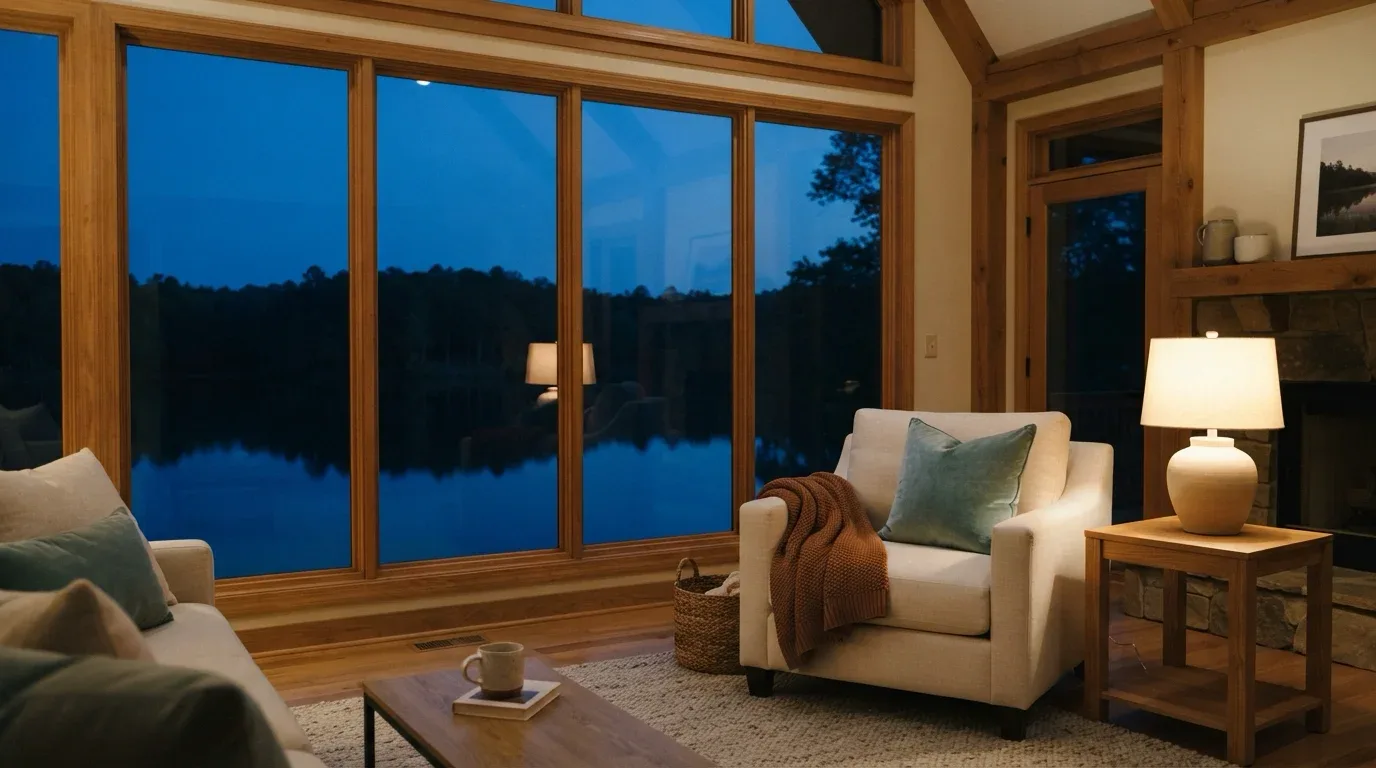
That guest is easier to host and harder to impress. They are not out on the water from breakfast to sunset. They are in your living room with a book, cooking dinner in your kitchen, and looking out your windows at dusk.
The lake itself is part of the pitch in fall, and it is a big one — roughly 39,000 acres of water and some 692 miles of shoreline under U.S. Army Corps of Engineers management, according to the Lake Lanier Association. In summer that scale reads as recreation. In fall it reads as quiet, which is precisely what a shoulder-season guest is booking. Lean into it in your listing copy and your staging: the view, the fire pit, the porch in the morning, the fact that the house is calm.
What actually changes about a fall turnover
Four things shift, and all of them are practical.
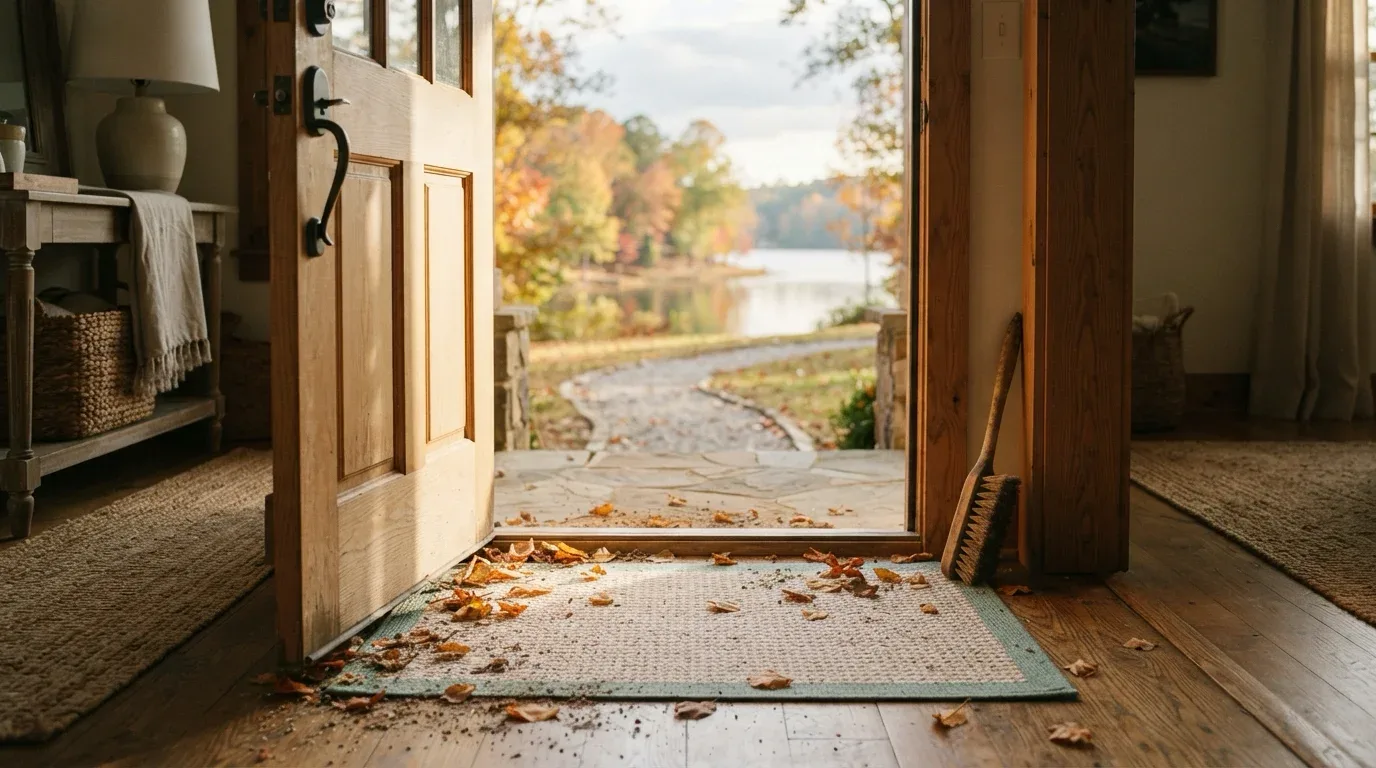
The entries carry the season. Leaves, damp grit, and wet shoe traffic collect at the doors from late September onward. A mat that was fine all summer becomes the dirtiest object in the house. Entry work moves from a two-minute task to a real step in the sequence — sweep the threshold, wash or shake the mats, wipe the door and frame, and clear slick leaves off the path before an arrival.
It gets dark early. Guests who arrive at six in the evening in July arrive in the dark in November. Every burned-out bulb in a hallway, stairwell, or entry becomes a first impression and a safety issue. Lighting checks belong in every fall turnover, not the seasonal maintenance list.
The air flips from humid to dry. Summer on Lanier is a humidity-management job. Fall is the transition out of it — and the changeover is exactly when soft goods that sat damp all August start to announce themselves. Throws, cushions, closet linens, and anything stored in a lower-level room deserve a sniff test on the first few fall turnovers.
The house is occupied differently. More indoor hours means more dust visible on horizontal surfaces, more kitchen use, more fireplace and blanket use, and more attention paid to glass. Blankets and throws that were decorative all summer become things guests actually wrap up in, which moves them from the staging list to the laundry list. The same is true of the extra bedding in the closet: the first cold snap is when a guest goes looking for it, and what they find should not smell like August.
There is a fifth change, quieter than the others: the calendar itself. Summer runs on a metronome — Saturday out, Saturday in — while fall bookings land irregularly, midweek and last-minute. Whoever cleans for you, loop them in the moment a reservation lands rather than the morning of checkout; with turnover slots booked days in advance, the reservation-to-cleaner handoff is the step that decides whether the house is ready.
The between-seasons deep clean
Every rental on this lake carries summer damage, even the well-run ones. Sunscreen film on door handles and railings. Sand that migrated from the entry into the rugs and never fully left. Grout that took a hard season. Upholstery that hosted wet swimsuits more than once.
A turnover clean is not built to fix that — it is built to reset a house between guests, on the clock. The between-seasons deep clean is the separate job that resets the baseline, and fall is when it fits: after the summer wear, before the holiday bookings.
Booked in that window, it does two useful things at once. It lifts the standard your turnovers maintain for the rest of the year, and it puts the house in front of the holiday season already at its best rather than catching up. If you also own the place as a second home rather than renting it out full time, the owner’s version of this job is a different animal — cleaning your own lake place, not a rental? Start with the end-of-summer reset.
The fall turnover sequence
The order below adapts the five stages Airbnb describes in its hosting cleanliness standards — prepare, clean, sanitize, check, and reset — with the entry work Lanier’s fall conditions demand folded in. The platform guidance also covers changing door codes between reservations and keeping smoke and carbon monoxide detectors in working order, both of which belong in the check step rather than a once-a-year list.
Work the sequence in order. The reason turnovers run long is almost never the cleaning itself — it is doubling back.
- Prepare. Walk the house, note damage, and start linens immediately so laundry runs while you work.
- Clean. Top to bottom, back to front. Add lake-facing glass to the standing list.
- Sanitize. High-touch points: handles, switches, remotes, railings, faucets.
- Reset the entries. Sweep leaf litter and grit, wash or shake mats, wipe the door and frame, clear the path.
- Check. Bulbs in every room used after dark, detectors, and codes changed between reservations.
- Reset for arrival. Stage to match the listing photos and set the heat for a comfortable arrival.
Linens are the step most likely to break a same-day turnover. On our turnovers, we work with what the house holds: when a fresh host set is on hand we strip, swap, and stage it, and when it is not we wash the linens on site — though keeping at least two complete sets per bed is still the habit that keeps any turnover, ours or yours, off the dryer’s schedule.
What fall guests notice
Fall guests grade the inside of the house. In practice that means a short list gets disproportionate weight in reviews:
- Glass, because they sit in front of it at golden hour.
- Smell, because the windows are closed and the house is warm.
- Warmth cues — a throw that is clean, a bed that is layered for a cold night, heat that is already on when they walk in.
- Working light, because they arrive and cook and read in the dark.
- Dust on the surfaces they actually touch — mantels, side tables, nightstands.
None of that is expensive. All of it is easy to miss if the turnover is run on a summer checklist.
When to bring in a turnover partner
Some hosts run their own turnovers beautifully, and fall’s slower pace is the easiest time of year to do it. The point of hiring out is not that the work is complicated — it is that it has to happen inside a fixed window, on someone else’s schedule, every single time, whether or not you are in town.
If you are weighing it, our guide to hiring a cleaning service for a vacation rental walks the vetting questions, and the Vrbo host setup guide covers the platform-specific side. On our end, turnover work is built for hosts by platform — Airbnb cleaning and Vrbo cleaning run on the same standard, and the full scope lives on our lake house and vacation rental cleaning page. Same small, dedicated team on your property each time, so the people cleaning your rental in October are the ones who learned it in June.
The lake rewards hosts who take the shoulder season seriously. The guests are easier, the pace is kinder, and the house you hand to the holidays is the one you set up now.