

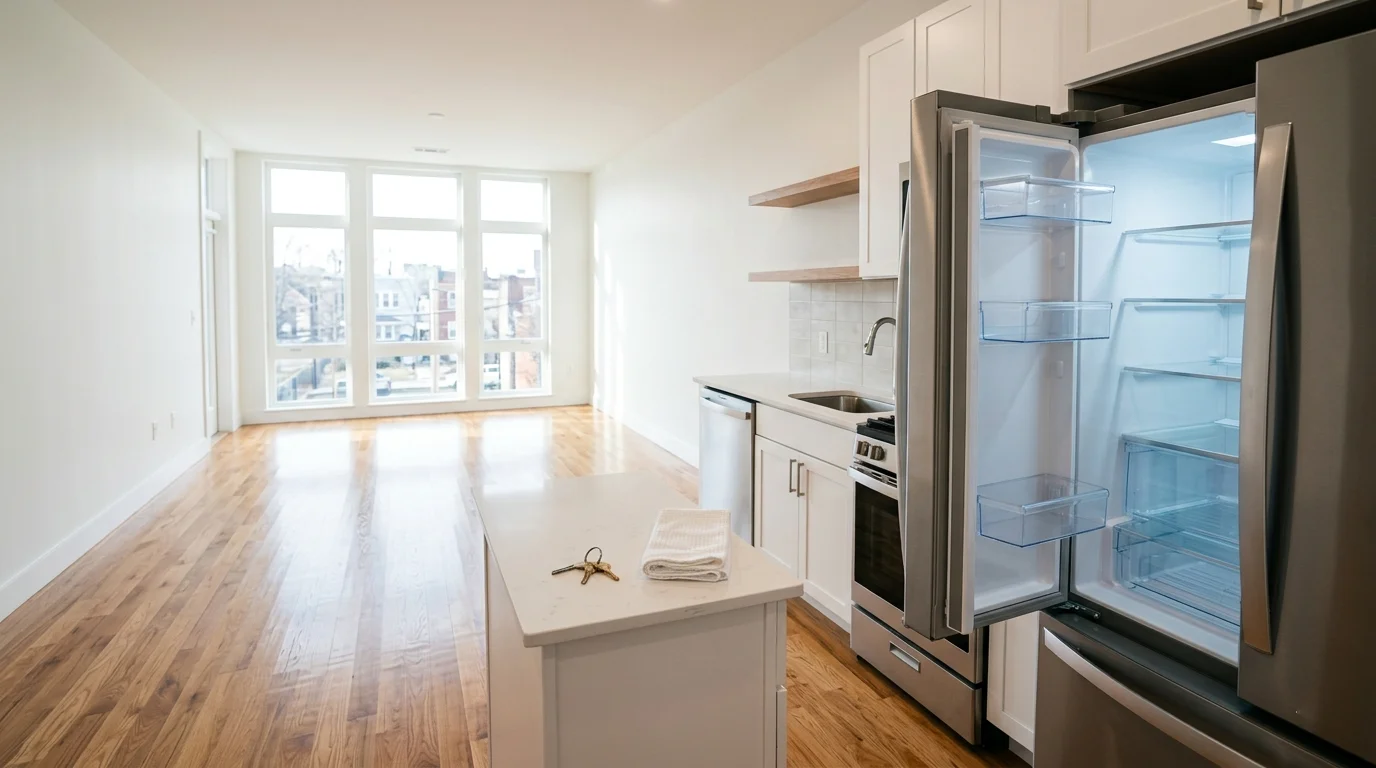
A turnover is the only window a landlord gets to fully reset a rental property.
The few days between a tenant moving out and the next one moving in are when professional cleaning, minor repairs, and any major maintenance has to happen — usually with a fixed deadline.
After 20+ years cleaning properties around North Georgia, I have worked with single-property landlords, small portfolios, and property management companies handling dozens of units.
The patterns that separate landlords who run smooth turnovers from landlords who fight constant turnover chaos are not about cleaning frequency.
They are about scope clarity, vendor relationship quality, and documentation discipline.
This guide walks through what apartment turnover cleaning should include, realistic per-unit cost benchmarks, the relevant Georgia security deposit law, and how to build the kind of cleaner relationship that actually scales.
For broader context on cleaning during major property events, see our complete guide to property transition cleaning.
What Apartment Turnover Cleaning Should Include
A proper apartment turnover clean covers significantly more than a regular recurring clean and overlaps substantially with move-in/move-out cleaning.
The standard scope:
Kitchen
- Inside oven, including racks and broiler
- Inside refrigerator and freezer (after defrost if needed)
- Inside microwave
- Inside dishwasher (run a sanitizing cycle, clean the filter)
- Inside all cabinets (every shelf, every drawer)
- Behind and under the refrigerator and stove
- Range hood and filter
- All counters, backsplash, and sink
- Floor mopped after all other work
Bathrooms
- Toilet inside and out (including the base and behind)
- Shower or tub with descaling treatment
- Tile grout treatment in shower
- Sink, vanity, and mirror
- Inside all drawers and the medicine cabinet
- Floor mopped
- Exhaust fan dusted (and unscrewed and cleaned if heavily caked)
Living areas and bedrooms
- All baseboards hand-wiped
- All door frames and doors hand-wiped
- All light switches and outlet covers wiped
- All window sills and tracks cleaned
- Inside closet shelves and rods wiped
- Ceiling fans cleaned blade-by-blade
- Light fixtures cleaned (where safely accessible)
- HVAC vent registers and grills cleaned
- Carpets vacuumed thoroughly with HEPA equipment
- Hard floors swept and mopped
Whole-unit detail
- All windows interior cleaned
- Patio or balcony swept and wiped
- Storage areas (basement, attic, balcony storage) cleared and wiped
- Front door and frame cleaned
- Mailbox cleaned
Final inspection
- Photo documentation of every room post-cleaning
- Note of any damage discovered (worth landlord attention before next tenant)
- List of items that need replacement (light bulbs, batteries, air filters)
The whole job for a typical 1-bedroom apartment runs 4-6 hours.
For a 3-bedroom unit, expect 8-12 hours.
Cost-Per-Unit Benchmarks for North Georgia
These are typical ranges for the Gainesville, Buford, Cumming, and Lake Lanier rental market.
| Unit Type | Per-Turnover Range |
|---|---|
| Studio | $175-$275 |
| 1 BR / 1 BA | $225-$350 |
| 2 BR / 1 BA | $300-$450 |
| 2 BR / 2 BA | $350-$500 |
| 3 BR / 2 BA | $450-$650 |
| 3 BR / 2.5 BA | $500-$725 |
| 4 BR / 2.5 BA | $625-$875 |
| Townhome (varies by sqft) | $400-$700 |
These ranges assume a tenant left the unit in normal condition.
Heavy cleaning needed (smoke residue, pet damage, neglect) is typically billed separately as add-on hours or a flat surcharge.
For more on the cost variables in residential cleaning generally, see house cleaning cost in Gainesville.
Volume Pricing for Multi-Unit Portfolios
Most cleaning services offer per-unit discounts for landlords managing multiple properties.
The math typically works out to:
- Single property: standard rate
- 2-5 units: 8-12% discount on per-turnover rate
- 6-15 units: 12-20% discount
- 15+ units: custom pricing, often with a dedicated crew
Volume discounts work because:
- Predictable booking pipeline reduces sales cost for the cleaner
- Multiple units in close proximity reduce travel time per job
- Standardized scope across units reduces estimation overhead
- Established billing relationship reduces administrative cost
If you manage more than 5 properties, ask for a portfolio rate explicitly.
Most local services will offer one but will not lead with it.
GA Security Deposit Law: What Affects Cleaning
Georgia security deposit law (O.C.G.A. § 44-7-30 through § 44-7-37) governs what landlords can withhold from a tenant’s deposit and how cleaning relates.
The relevant provisions for cleaning charges:
Move-out condition reports are required for some properties
If the property is owned by a landlord with 10 or more units total, GA law requires a written move-in condition report when the tenant takes possession and a move-out inspection when they leave.
The cleaning expectations should be clearly defined in the move-in report.
Charges that are not consistent with the move-in baseline can be challenged.
”Normal wear and tear” cannot be charged to the tenant
A landlord cannot charge a tenant for cleaning that addresses normal use of the property over the lease term.
This includes:
- Light dust accumulation
- Minor surface marks
- Carpet wear from foot traffic
- Minor scuffs on walls
Landlords can charge for cleaning that addresses tenant-caused issues beyond normal wear:
- Heavy grease in the kitchen
- Pet damage and odor
- Smoke residue
- Stains in carpet or on surfaces
- Items left behind requiring disposal
- Excessive trash or unsanitary conditions
Documentation matters
A landlord deducting cleaning costs from a security deposit must provide an itemized statement and receipts.
A vague “$300 for cleaning” line item is likely to be challenged.
A statement showing “$425 for professional turnover cleaning, $200 surcharge for excessive pet damage and odor remediation” with the cleaner’s invoice attached is much harder to challenge.
This is one reason a relationship with a professional cleaner who provides itemized invoices and photo documentation is worth the cost.
For tenants moving out who want to maximize their deposit return, our move-out cleaning checklist for security deposits covers their side of this same dynamic.
Timing for deposit return
Georgia law requires deposit return (or itemized statement of deductions) within 30 days of tenant move-out for landlords subject to the law.
This means the cleaning has to be completed and invoiced quickly.
A 1-2 day turnaround on the cleaning visit and a same-week invoice from the cleaner is the practical standard.
Same-Day Turn for Back-to-Back Leases
When a unit has back-to-back leases (one tenant moving out, next tenant moving in within 24-48 hours), the turnover cleaning has to happen fast.
The realistic timeline:
| Day | Time | Event |
|---|---|---|
| Move-out day | 10:00 a.m. | Tenant moves out, returns keys |
| Move-out day | 11:00 a.m. | Landlord/PM walkthrough |
| Move-out day | 12:00 p.m. | Cleaning crew arrives |
| Move-out day | 6:00 p.m. | Cleaning complete |
| Move-out day | 7:00 p.m. | Maintenance walkthrough (paint touch-ups, light bulbs, filters) |
| Day +1 | 8:00 a.m. | Final landlord inspection |
| Day +1 | 11:00 a.m. | Touch-up cleaning if needed |
| Day +1 | 2:00 p.m. | Unit ready for new tenant |
| Day +1 | 4:00 p.m. | New tenant moves in |
This compressed timeline only works with:
- A cleaning crew that can mobilize within 24 hours of notification
- A unit in normal condition (heavy cleaning needs blow up the timeline)
- No major maintenance issues discovered at walkthrough
- A landlord who completes their inspection promptly
If any of these break, you need a buffer day.
For more on the operational side of fast turnovers (a problem vacation rental owners deal with constantly), see same-day Airbnb turnover on Lake Lanier — many of the principles transfer.
Building a Vendor Relationship That Scales
The landlords with the smoothest turnovers all have one thing in common.
They have a long-term cleaner relationship rather than booking ad hoc.
What that relationship typically looks like:
Predictable scheduling
The cleaner blocks recurring weekly or monthly time on their calendar for your portfolio.
You give them as much advance notice as you have, but you never compete for last-minute capacity.
Standardized scope and pricing
You agree on a per-unit-type rate that covers the standard scope.
Heavy cleaning (smoke, pets, neglect) is billed at a standardized hourly add-on or flat surcharge — no per-job negotiation.
Shared documentation
The cleaner sends photo documentation and a brief condition report after each turnover.
These photos become evidence if a deposit deduction is challenged later.
Emergency mobilization
For genuine same-day or next-day emergencies, the cleaner can mobilize within 24 hours — often at a small surcharge.
This is the value of the relationship more than any specific job.
Integrated communication
The cleaner has direct contact with the landlord or property manager who books, not through a multi-step support channel.
A short text confirms each scheduled turnover.
This kind of relationship typically takes 6-12 months to develop.
It is worth the investment for any landlord with 5+ units.
What to Provide Your Cleaner
A short briefing for each turnover saves time and reduces issues.
For each unit, provide:
- Address and access details (key location, lockbox code)
- Tenant move-out date and approximate departure time
- Next tenant move-in date (if scheduled)
- Any specific issues from the move-out walkthrough
- Any maintenance or repair work that will be happening alongside the cleaning
- Where to leave keys after completion
- How to communicate completion (text, email, photo upload)
A standardized intake form that you reuse for every turnover saves both you and the cleaner significant time.
Add-On Services Worth Bundling
A few services that pair well with apartment turnover cleaning.
Carpet steam cleaning
Most apartments do not need professional carpet cleaning at every turnover, but it is recommended every 12-18 months or after heavy-pet households.
Bundling carpet cleaning with the turnover saves on travel and minimum-service charges.
Window cleaning
Quarterly or semi-annual exterior window cleaning maintains property appeal and is most economically done as part of a turnover visit.
Light maintenance
Many cleaners can include basic maintenance during the turnover at modest add-on rates: replacing light bulbs, replacing HVAC filters, replacing batteries in smoke detectors, minor paint touch-ups.
Bundling these into the turnover cleaning visit eliminates a separate maintenance trip.
Deep cleaning specialty work
Periodic deep cleaning of specific items — refrigerator coil cleaning, oven deep clean, full HVAC vent cleaning — can be scheduled into the turnover as needed.
These are not annual needs but worth including every 18-24 months.
When to Call in Specialty Services Instead
Some turnovers require services beyond standard cleaning.
Post-construction cleaning
If you renovated the unit between tenants — new flooring, paint, cabinets — you need post-construction cleaning, not standard turnover cleaning.
The drywall dust and construction debris cannot be addressed by a regular cleaning crew without HEPA equipment.
For the difference, see post-construction cleaning vs deep cleaning.
Biohazard or extreme conditions
Severe pet damage, hoarding situations, biohazard incidents, or extreme neglect require specialty services rather than standard cleaning.
These are typically billed separately and may require coordination with insurance.
Smoke remediation
Heavy cigarette or marijuana smoke residue requires a specific remediation process beyond standard cleaning.
A surface clean will mask but not remove the odor; the next tenant will notice within a week.
The Bottom Line
Apartment turnover cleaning is a different service from regular house cleaning, with different scope, different documentation requirements, and different vendor relationship dynamics.
Landlords who treat it as a transactional purchase pay more, get less consistency, and have weaker documentation when deposit disputes happen.
Landlords who build a long-term cleaner relationship pay less per unit, get reliable scheduling, and have the documentation they need to defend any deductions.
If you manage rental properties in the Gainesville, Buford, or broader Lake Lanier area and would like to talk through what an ongoing turnover relationship would look like for your portfolio, see how we work with property managers or request a free quote.
We will walk through your typical turnover scope, propose a per-unit rate structure, and outline the documentation we provide after each visit.