
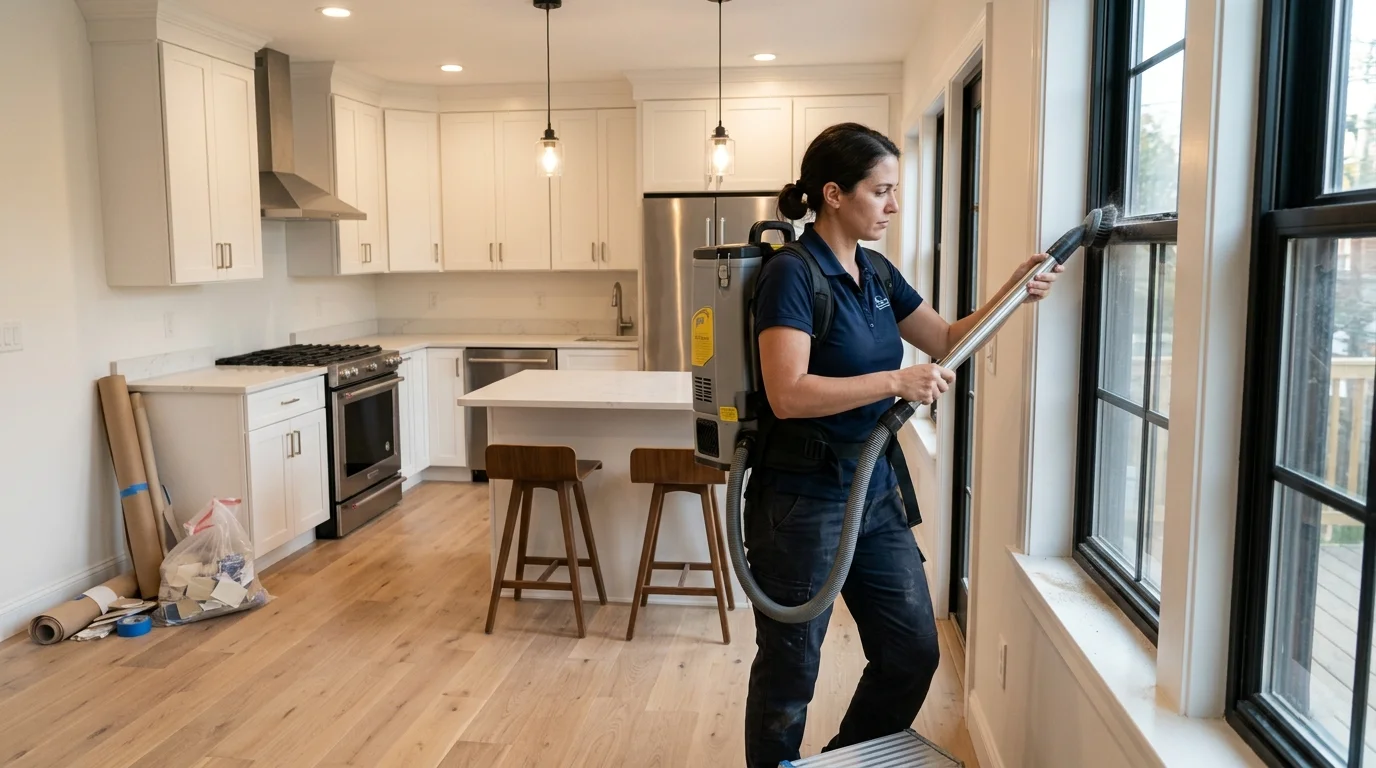
Expert Post-Construction Cleanup in Gainesville GA
Professional cleanup after renovations and construction projects - removing dust, debris, and residue from every surface.
What is post-construction cleaning?
Post-construction cleaning is the specialized cleanup that follows renovation or new-build work — drywall dust, paint splatter, adhesive residue, sawdust, and HVAC contamination. It requires HEPA-filtered equipment and multi-pass technique, not regular cleaning.
You’ve invested weeks, maybe months, into your renovation project. The new kitchen looks stunning, the bathroom is exactly how you envisioned it, and the floors are gorgeous. But there’s one problem: construction dust is everywhere. On every surface, inside every cabinet, coating every fixture, and settled into every crevice. (Here’s how our small-team model handles post-construction projects →)
Post-construction cleaning is a specialized service that goes far beyond what a regular cleaning can handle. Drywall dust is incredibly fine and pervasive. It settles on surfaces, behind appliances, inside HVAC vents, and on light fixtures. Paint splatters, adhesive residue, and sawdust require specific techniques and products to remove without damaging your brand-new finishes.
Want the bigger picture? Start with our complete Property Transition Cleaning Guide — a deep walkthrough of cleaning during moves, sales, and renovations, including how post-construction work differs from move-in/move-out cleaning and when you might need both. The rest of this page focuses on what’s included in our post-construction service and how to schedule us.
What does post-construction cleaning include?
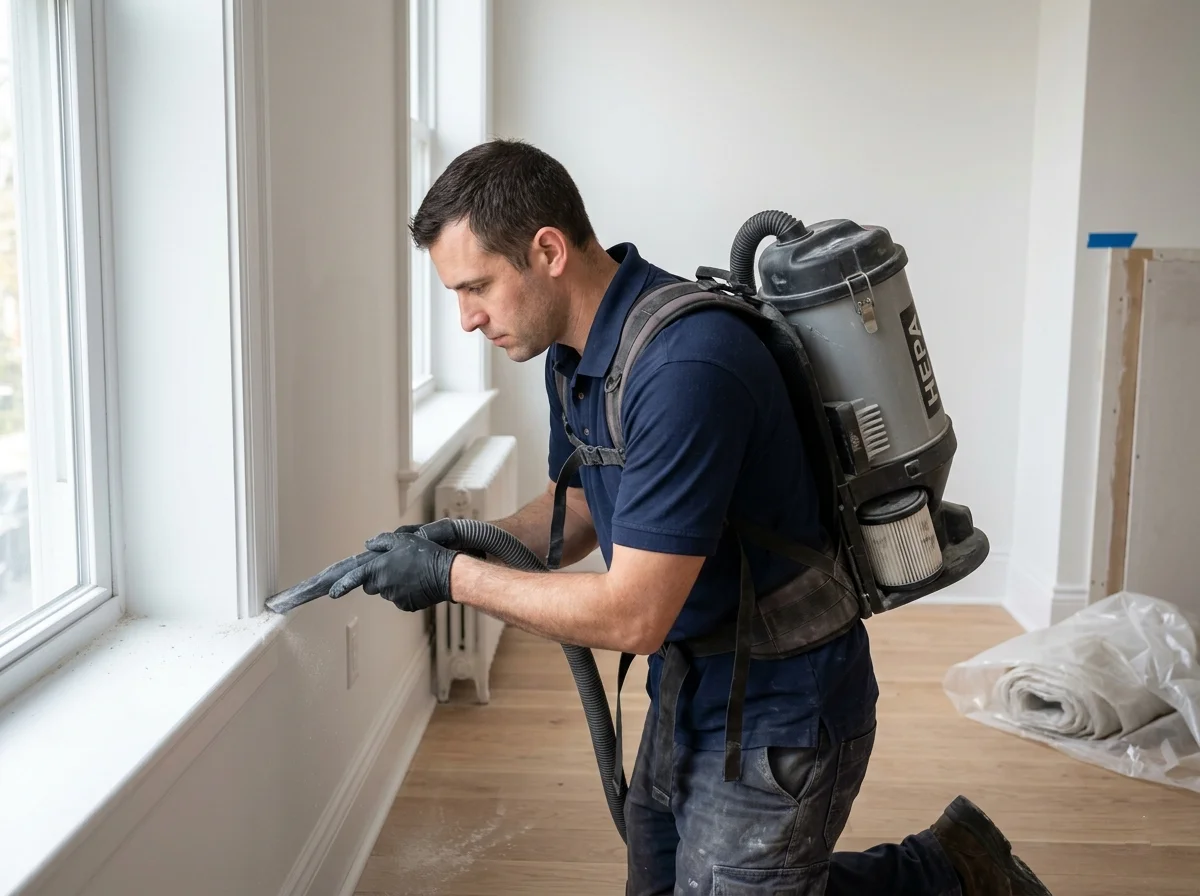
Three passes: coarse debris (large materials, tape residue, rough vacuum), surface cleaning (HEPA dust removal from every horizontal and vertical surface, inside cabinets, windows, light fixtures, HVAC vents), and detail/finish (paint splatter, adhesive, floor polish, baseboards, final inspection).
Pass 1 - Debris Removal:
- All large debris and construction materials cleared
- Rough sweeping and vacuuming of all surfaces
- Removal of protective coverings and tape residue
Pass 2 - Surface Cleaning:
- Drywall dust removal from all surfaces (walls, ceilings, fixtures)
- Window and glass cleaning (removing stickers, tape, and dust film)
- Cabinet interior and exterior wiping (inside shelves, drawers)
- Countertop and backsplash scrubbing
- Appliance interior and exterior cleaning
- Light fixture, ceiling fan, and vent cleaning
Pass 3 - Detail and Finish:
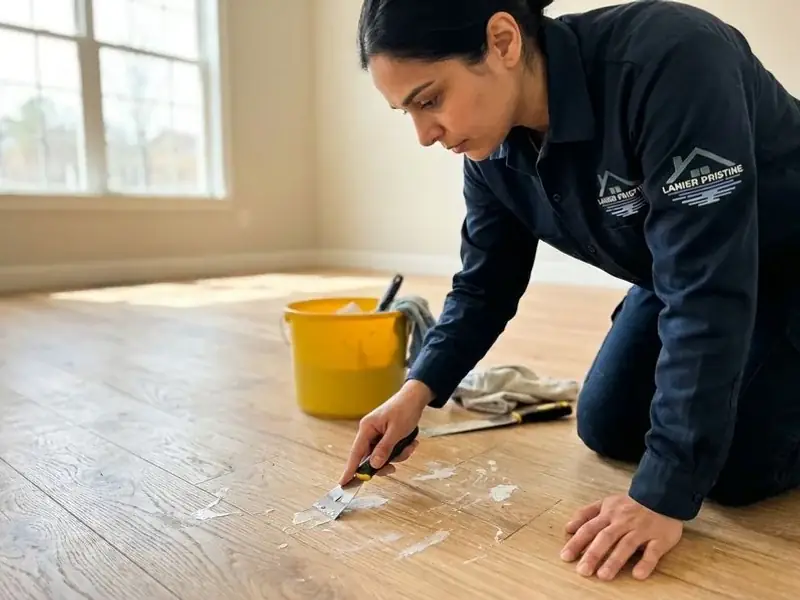
- Paint splatter removal from floors, fixtures, and hardware
- Adhesive and caulk residue cleanup
- Floor scrubbing and polishing (tile, hardwood, or vinyl)
- Baseboards and trim wiping
- Door and door frame cleaning
- Final dust inspection and touch-up
Do you work with contractors and homeowners?
Both. Contractors hire us to deliver a finished project that looks move-in ready. Homeowners hire us between contractor sign-off and their own move-in. Either way, we schedule within 2-3 days of project completion and most renovations clean in one full day.
We work with both contractors and homeowners throughout the Lake Lanier area. For contractors, we understand the importance of delivering a finished project that looks move-in ready. For homeowners managing their own renovation, we bridge the gap between “construction complete” and “home ready.” If you are a local business owner upgrading your commercial space, establishing an ongoing maintenance routine is just as crucial as this initial cleanup — read our tips on choosing a commercial cleaning company in North Georgia.
Our scheduling is flexible enough to accommodate tight project timelines. We can typically schedule your post-construction clean within 2-3 days of project completion, and most standard renovations take one full day to clean.
Why can’t a regular cleaning handle construction dust?
Drywall dust is fine like flour — a regular vacuum without HEPA filtration just redistributes it into your air, HVAC system, and electronics. Post-construction cleanup requires HEPA equipment, specialty products, and multi-pass technique to actually remove particles rather than spread them.
Construction dust isn’t regular house dust. Drywall dust is extremely fine (comparable to flour) and can damage electronics, HVAC systems, and sensitive surfaces if not properly removed. Using standard cleaning methods, or worse, a regular vacuum without HEPA filtration, can simply redistribute the dust rather than removing it.
As a construction cleaning company built for renovation-grade dust, our team uses professional-grade HEPA filtration equipment, specialized cleaning products designed for post-construction environments, and proven techniques to ensure every particle of construction residue is eliminated. We’ve cleaned renovations ranging from single-room remodels to complete home rebuilds across Gainesville, Buford, and the greater Lake Lanier area.
Protecting Your Investment
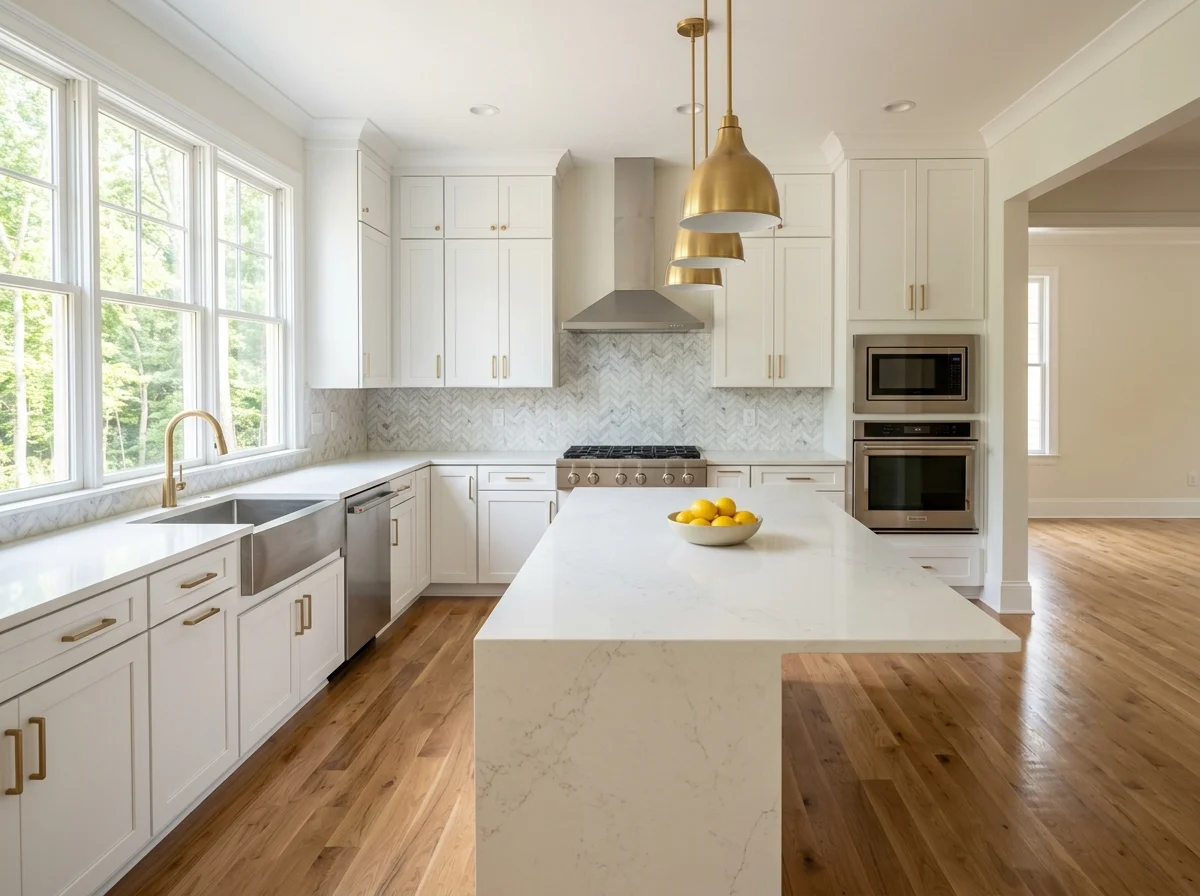
You’ve spent significant time and money on your renovation. Don’t let construction dust diminish the result. Our post-construction cleaning ensures your new space looks exactly as intended: clean, polished, and ready to enjoy from day one.
Contact us with your project details for a custom quote based on your renovation’s scope and square footage.
From the Journal
Understanding post-construction work:
Where We Serve
Post-construction cleaning across the Lake Lanier corridor: Gainesville, Buford, Cumming, Flowery Branch, Oakwood, Sugar Hill, Dawsonville, Dahlonega, Braselton, Hoschton, Winder, and Murrayville — see all 12 cities.
From Our Recent Cleanings
Get a Free Estimate
Free estimates — no obligation
Get a Free Estimate or call (678) 296-2926Inside Every Visit
- Drywall dust and debris removal
- Paint splatter and adhesive cleanup
- Window and glass cleaning
- Floor scrubbing and polishing
- HVAC vent and fixture cleaning
- Final detail and touch-up pass
Typical pricing
$525–$580 per project
for a typical 2,000 sq ft / 3 BR / 2 BA renovation. Multi-room remodels or whole-home rebuilds price higher due to drywall-dust volume and multi-pass cleanup. HEPA equipment included.
Quoted based on project scope and square footage — flat-rate, no hourly billing.
The Same Team, Every Visit
The same dedicated team who learns your home — led by owner Mara Guilford — backed by a 24-hour re-clean guarantee if anything's ever not right.
Trusted by Lake Lanier Homeowners
"5 Stars across the board! If you're looking for a cleaning service. That is reliably consistent. Then you need to Call Mara at Lanier Pristine. Mara Always does an impeccable job cleaning our house. Mara is personable, dependable. And is meticulous in her work. The wife and I could not be more pleased with choosing Lanier Pristine to clean our home."
"Mara has been with us for 15 years and we highly recomme her. We could always be trusted and counted on - she's reliable and does a great job. She always is friendly, smiling and loves dogs(bonus). We are moving and we will miss her."
"I have been with Lanier Pristine for close to three years now. Simply put, Mara is amazing! I am a super clean person, and I did not think someone else could do a better job than me. I was wrong! Mara is the best, and I could not ask for a more pristine clean house than what Mara provides me and my family. I HIGHLY recommend her. Plus, she is super reliable and kind person as well. Five stars!!!"
Questions About Post-Construction Cleaning
Is your team licensed, bonded, and insured?
Yes — Lanier Pristine is fully licensed, bonded, and insured for both residential and commercial cleaning across Hall and Forsyth Counties. Documentation available on request.
What's your satisfaction guarantee?
If you're not 100% satisfied, contact us within 24 hours and we'll return to re-clean the area free of charge.
What safety and cleanliness standards do you follow?
Our team follows industry-best sanitation practices and professional safety standards. Every team member is background-checked, trained on our cleaning protocols, and respectful of your space and privacy. We use sealed, color-coded cleaning supplies to prevent cross-contamination between bathroom and kitchen surfaces.
When should I schedule post-construction cleaning?
After contractor sign-off, before you move back in (or before furniture arrives). For single-room renovations (kitchen, bathroom), schedule 24–48 hours after the contractor leaves. Whole-home renovations: plan 2–3 days for a thorough multi-pass.
Do I need post-construction cleaning for a small remodel?
Depends on dust. A new floor install without wall work — a regular deep clean handles it. Anything involving drywall (new walls, repairs, ceiling work), painting, or cabinetry produces fine particulate that requires HEPA equipment to actually remove. Err on the side of post-construction for any drywall-involving work.
+ Show 7 more questions
What's the difference between post-construction and a deep clean?
Post-construction cleaning targets fine particulate — drywall dust, paint overspray, adhesive residue — using HEPA filtration and specialty solvents in a multi-pass workflow. Deep cleaning targets accumulated grime and surface buildup with standard equipment. Different scope, different technique. A regular deep clean will miss most of what post-construction is designed to handle.
How long does post-construction cleaning take?
Single-room remodels (kitchen or bathroom) take 4–6 hours with our 2-person team using HEPA filtration. Whole-home gut renovations take 1–2 full days for our multi-pass approach — first pass removes bulk debris, second handles fine dust, third polishes finished surfaces. Always quoted per-project after a walkthrough of scope and current condition.
Do you handle outdoor construction debris too?
Limited — we sweep entryways, wipe exterior glass, and clean any tracked-in debris. Bulk construction-waste removal (drywall scraps, packaging, lumber) is the contractor's responsibility, and a dumpster rental handles the rest.
What if there's still dust the day after?
Drywall dust settles over 24–48 hours after the initial clean — some re-settling is normal even after a perfect job. If it's more than light haze, contact us within 24 hours and we'll return for a touch-up pass at no charge under our guarantee.
Can you coordinate with our general contractor's schedule?
Yes — we work with both homeowners and contractors regularly. Tell us the contractor's sign-off date and we'll book the post-construction clean directly off that timeline. Contractors can also book us directly for builder-grade final cleans.
Do you use HEPA-filtered vacuums?
Yes — HEPA filtration is mandatory for post-construction work. A standard vacuum without HEPA will pass drywall dust through the filter and redistribute it into the air. We bring HEPA vacuums, sealed extraction units, and damp-microfiber technique to every post-construction job.
Will the cleaning damage new finishes (paint, hardwood, etc.)?
No — we use finish-specific products and technique. Soft microfiber on freshly painted walls (no chemicals near uncured paint), pH-neutral cleaners on hardwood, manufacturer-approved products on quartz/granite. If there's a finish you're concerned about, tell us during walkthrough.
Other Cleaning Services You May Need
Deep Cleaning
A comprehensive top-to-bottom clean for homes that need a thorough reset - ideal before starting recurring service.
View Deep Cleaning Details →Office & Janitorial Services
Professional office janitorial services with flexible after-hours scheduling and no long-term contracts.
View Office & Janitorial Services Details →Schedule Your Post-Construction Service Today
Free estimates — no obligation